Wednesday, December 3, 2014

Monday, November 24, 2014
C4T #4
For my final C4T assignment, I chose to read two posts from Tyler Rice's blog Wisdom Begins With Wonder. In the two posts that I read and commented on, Mr. Rice made some points that I completely agree with. Furthermore, I am very glad that we were able to choose our own C4T this time around. I was able to choose a blog that I was really interested in, and Mr. Rice is the first teacher that has acknowledged my thoughts and responded to my comments.

The first post I read was The Curse of the Standardized Test. In this post, Mr. Rice talks a lot about how the growing focus on standardized testing has changed him. He expresses that he still tries to allow his students to collaborate and engage in real-world learning; on the other hand, he expresses that testing has changed him, and not for the better. In my comment, I told Mr. Rice that I know how testing can change teachers, because I experienced it first-hand when I was in high school. Before the school began to focus so much on testing, I had some very passionate teachers who loved what they did. Once testing came around, however, their spirits were silenced. I told Mr. Rice that I agree that testing limits students and that I do not think that students should be defined solely by their test scores. I also said that I think it is great that he still tries to allow his students to gain real-world experience and that I hope I can do the same for my future students.
The second post I read was You Can't Depend on Your Eyes When Your Imagination is Out of Focus. This post focuses on the fact that the school systems are so concerned with standardized testing and "teaching" that we have forgotten how valuable the knowledge gained from real-life experiences really is. He believes that is time that we stray from standardizing. In my comment, I told him that I completely agree that we are only being taught rather than being allowed to experience at this point. I also agreed that it is time to move away from standardization.
Blog #5 Part 2
I had never heard the term Personal Learning Network (PLN) prior to entering EDM 310, but I am very glad that we learned about them at the beginning of the semester. I began to build my very own PLN a few months ago, and since then, it has grown and changed quite a bit.
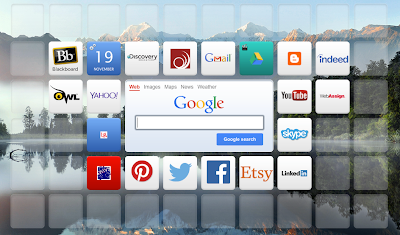
I used Symbaloo to start building my PLN. The image below is a screenshot of my Symbaloo page. As you can see, I have collected quite a few websites that I find useful and have made them all available from one source. When I first created my Symbaloo account, almost all of my tiles were websites that interest me rather than websites that would benefit me professionally. Since then, I have created tiles for websites such as Discovery Education, BIE, and several other websites that I think will be useful to me as a future educator. All of the websites that we used frequently in EDM 310, such as Blogger and YouTube, are also included in my PLN. We have used so many different websites and tools that I definitely think will be good to use in my future classroom.
There are quite a few people that I have found to be valuable resources throughout the semester, and I have added them to my PLN as well. Current, college-level educators such as Dr. Strange and Mrs. Gaillard are people that I will definitely include in my PLN. These teachers have so much experience and have access to so much knowledge and so many resources. When I first began to build my PLN, I compiled a list of some of my past teachers that I believe would be valuable assets to my network. I find that lower-level teachers are good to include because they have experience working with the age group that I want to work with one day. I have also come in contact with other teachers during my time as an education major, such as the teacher for my interview movie or the teacher I observed with in EPY 351, that I have added to my network. Furthermore, I have found that there are so many teachers who blog and it is fairly easy to search for them. I think that these teachers, like the ones we have been assigned to for C4T, would be good to keep in mind as well.
I am so glad that we had the opportunity to learn about Personal Learning Networks. I have enjoyed building mine throughout the semester, and I know that it will only grow as I continue on in my journey to becoming an educator.
I used Symbaloo to start building my PLN. The image below is a screenshot of my Symbaloo page. As you can see, I have collected quite a few websites that I find useful and have made them all available from one source. When I first created my Symbaloo account, almost all of my tiles were websites that interest me rather than websites that would benefit me professionally. Since then, I have created tiles for websites such as Discovery Education, BIE, and several other websites that I think will be useful to me as a future educator. All of the websites that we used frequently in EDM 310, such as Blogger and YouTube, are also included in my PLN. We have used so many different websites and tools that I definitely think will be good to use in my future classroom.

There are quite a few people that I have found to be valuable resources throughout the semester, and I have added them to my PLN as well. Current, college-level educators such as Dr. Strange and Mrs. Gaillard are people that I will definitely include in my PLN. These teachers have so much experience and have access to so much knowledge and so many resources. When I first began to build my PLN, I compiled a list of some of my past teachers that I believe would be valuable assets to my network. I find that lower-level teachers are good to include because they have experience working with the age group that I want to work with one day. I have also come in contact with other teachers during my time as an education major, such as the teacher for my interview movie or the teacher I observed with in EPY 351, that I have added to my network. Furthermore, I have found that there are so many teachers who blog and it is fairly easy to search for them. I think that these teachers, like the ones we have been assigned to for C4T, would be good to keep in mind as well.
I am so glad that we had the opportunity to learn about Personal Learning Networks. I have enjoyed building mine throughout the semester, and I know that it will only grow as I continue on in my journey to becoming an educator.
Tuesday, November 18, 2014
Blog #14
In the article Teaching Can Be a Profession, Joel Klein expresses how he wants to professionalize teaching so that it can be a well-respected career. The article outlines a number of problems with teaching and possible solutions to go with each one. The problems and solutions that Klein talks about are as follows:
Problems & Solutions:
1. Pick from the best: Some teachers today are not the most capable or the most prepared. Those who are trying to become teachers are not being taught nor trained properly. Some solutions include providing better academic training for incoming teachers, finding a new approach to recruiting teachers (recruit from the top third of graduates), and changing how teachers are rewarded.
2. Seniority distraction: Seniority dictates the way schools operate, and all teachers are paid the same and rewarded the same regardless of level of performance. If layoffs have to happen, the most recently hired is usually let go first, even if they are doing the best job. A possible solution to this issue is creating a "national teacher examination" requiring that prospective teachers complete a supervised internship that would last from one to three years.
3. Radical change: There are too many incompetent teachers that need to be removed. Solutions for this problem include establishing standards in order to remove incapable teachers and giving teachers the opportunity to promote based on specialty exams.

1. Pick from the best:
I agree with Mr. Klein that some teachers are simply not qualified to teach, and I believe that is a result of the requirements (or lack thereof) that are in place to become a teacher. I do not necessarily agree that recruiting solely from the top third of graduates would help anything. I do, however, agree that the given issue could be fixed by improving academic training programs. If students were properly and effectively taught and trained, there would be no need to only recruit the best, because everyone should be at the same level.
2. Seniority distraction:
I definitely think that seniority is an issue in some ways. I have witnessed teachers being removed from schools not because they were incompetent but because they were the most recently hired. Teachers got to keep their jobs because they had taught there for years even though the other teachers were more capable and more effective. I do not think that is right at all. I think that Klein's idea about giving a teacher examination and requiring the supervised internship is good; however, I do not know that it would completely get rid of this issue. They may pass the exam or make it through the internship, but they may not be able to adapt to the ever-changing education system, and they may become incompetent over time. While I do not agree that this solution would be effective, I do think that seniority is a problem, and I think that it needs to be fixed.
3. Radical change:
I completely agree that incompetent teachers need to be removed. I believe that establishing standards is a great way to see who is inadequate. Promoting based on specialty exams is a good idea as well. I think that the possibility of promoting would push teachers to go above and beyond. Klein also states that this could lead to less and less teachers being aided by teaching assistants, which I personally think is a good thing. Although everyone needs help at some point, I agree that most teachers are perfectly capable of running a classroom without help.
This article definitely makes some very good points. Klein listed numerous problems that need to be fixed in order to make teaching a well-respected profession, and I think that most of his solutions would help a tremendous amount. While I do not agree with all of his thoughts, I do for the most part. I think that if we fix these problems, we will be on our way to professionalizing teaching.
Monday, November 17, 2014
November C4K Summary
I have had to read some very informative and insightful blog posts for my C4K assignments this month. All of the kids that I have been assigned to seem so bright, and I have thoroughly enjoyed reading all of their posts.
Week 1:
Elliot was the first student that I was assigned to this month. This is the third time that I have been assigned to Elliot for my C4K, which I am very happy about, because his posts are so much fun to read. Every time that I have been assigned to him, I have read all of his posts rather than just the one that I was supposed to comment on. In the post that I commented on, Elliot focuses on the four different types of citizens- local, digital, Canadian, and global. He gives a brief description of each, and then goes on to express why it is so important to be a good global citizen. In my comment, I told him that I always enjoy reading his posts because I learn a lot from them. I said that I knew there were different types of citizenship but was unaware of the four types before reading his post. I told him that I learned that I am a local, digital, and global citizen. I also agreed with him that it is important to be a good global citizen and take care of the world around you.
 Week 2:
The second student that I was assigned to this month was Mckenzie. In her post, she shared a project that she created in her art class. The project required them to take a picture of their reflection in the mirror and then draw what they see in their future over their reflection. In her picture, Mckenzie drew a question mark over her reflection. She said that she did this because her future is uncertain and filled with questions. In my comment, I told her how much I loved her post and how creative she is. I also expressed how much I liked the fact that she used a question mark to represent her future. I told her that she is still young and has plenty of time to make her future go in the direction that she wants it to and that she does not have to be certain about it yet. I ended by telling her how great of a job she did.
Week 3:
Pablo was the last student that I was assigned to this month. In the post that I read, Pablo reflected on his work from this quarter and set goals to do better next quarter. He said that he did well this quarter, but he could have done better. He talked about two main goals that he has for next semester. He wants to get over his shyness and get more involved in class. He also wants to do better next quarter than he did this time around. In my comment, I told him how much I enjoyed his post and how great his vocabulary is. I also told him that it's great that he set goals for himself for next quarter. I told him that I was also fairly quiet in my classes when I was younger, but that I found that I gain so much more by actively participating in class. I also said that it is very important to always strive to do better and be the best that you can be.
Week 1:
Elliot was the first student that I was assigned to this month. This is the third time that I have been assigned to Elliot for my C4K, which I am very happy about, because his posts are so much fun to read. Every time that I have been assigned to him, I have read all of his posts rather than just the one that I was supposed to comment on. In the post that I commented on, Elliot focuses on the four different types of citizens- local, digital, Canadian, and global. He gives a brief description of each, and then goes on to express why it is so important to be a good global citizen. In my comment, I told him that I always enjoy reading his posts because I learn a lot from them. I said that I knew there were different types of citizenship but was unaware of the four types before reading his post. I told him that I learned that I am a local, digital, and global citizen. I also agreed with him that it is important to be a good global citizen and take care of the world around you.

The second student that I was assigned to this month was Mckenzie. In her post, she shared a project that she created in her art class. The project required them to take a picture of their reflection in the mirror and then draw what they see in their future over their reflection. In her picture, Mckenzie drew a question mark over her reflection. She said that she did this because her future is uncertain and filled with questions. In my comment, I told her how much I loved her post and how creative she is. I also expressed how much I liked the fact that she used a question mark to represent her future. I told her that she is still young and has plenty of time to make her future go in the direction that she wants it to and that she does not have to be certain about it yet. I ended by telling her how great of a job she did.
Week 3:
Pablo was the last student that I was assigned to this month. In the post that I read, Pablo reflected on his work from this quarter and set goals to do better next quarter. He said that he did well this quarter, but he could have done better. He talked about two main goals that he has for next semester. He wants to get over his shyness and get more involved in class. He also wants to do better next quarter than he did this time around. In my comment, I told him how much I enjoyed his post and how great his vocabulary is. I also told him that it's great that he set goals for himself for next quarter. I told him that I was also fairly quiet in my classes when I was younger, but that I found that I gain so much more by actively participating in class. I also said that it is very important to always strive to do better and be the best that you can be.
Thursday, November 13, 2014
Project #12 Part B
Our group decided to create a kindergarten lesson about the "greater than" and "less than" math concept. We showed them a story, which motivated them and taught them the material all at the same time. We then worked out practice problems in several different activities. Our lesson plan can be found here.
Wednesday, November 12, 2014
Blog #13
We have been given a multitude of resources and insights with each blog assignment that we have completed. Most of the assignments, however, focused on teachers in general rather than specific types of teachers. There were really no blog assignments pertaining to just high school English teachers or just special education teachers. I, as an elementary education major, would have liked to see assignments or videos specific to elementary teachers. I think that the following assignment would definitely be beneficial. The question could be changed to "for your area of specialty" rather than "in elementary schools" as well. I think that it would also give the students a chance to do some research on their own rather than just watching the listed videos or reading the given articles.
--------------------------------------------------------------------------------------------
What are some available apps for the iPad that are designed to aid in the learning process in elementary schools?
Find at least five apps for the iPad that you feel would be beneficial to the learning process for elementary students. This research can be done online or through the descriptions given in the Apple App Store. Try to give apps that relate to different subjects and have different functions.
--------------------------------------------------------------------------------------------
Here is my example of the blog post that I would create:
For this week's blog post, we were assigned to research iPad apps that would be useful in an elementary classroom. I have compiled a list of five free iPad apps that I think would be very beneficial to any elementary student.

1. SpellingCity is an app that helps students with spelling and vocabulary words in a fun way. It provides them with games that they can play, which makes the material seem more interesting. It also has a features called "Spelling TestMe" that tests the students by reading the word aloud, using it in a sentence, and repeating it again. It allows the students to work at their own pace and provides them with instant feedback.
2. MyScript Calculator is really a useful app for anyone. This app allows you to write out any math problem on the screen so that it can change your handwriting to digital text and solve the problem for you.
3. Educreations Interactive Whiteboard is an app that turns your iPad into a whiteboard. The uses of this app are unlimited; it can be used for any different subject. Students can use it to work out math problems, to practice spelling words, etc. This app also acts as a voice and screen recorder.
4. Periodic Table of the Elements is a great app for some of the older K-6 grades that learn about the elements. This provides an interactive Periodic Tables of Elements that provides information about each element when you click on it.
5. Atlas for iPad is a great interactive app that provides you with an interactive world map. This app has several different maps and contains valuable information about places, pictures of each country's flag, etc.
--------------------------------------------------------------------------------------------
What are some available apps for the iPad that are designed to aid in the learning process in elementary schools?
Find at least five apps for the iPad that you feel would be beneficial to the learning process for elementary students. This research can be done online or through the descriptions given in the Apple App Store. Try to give apps that relate to different subjects and have different functions.
--------------------------------------------------------------------------------------------
Here is my example of the blog post that I would create:
For this week's blog post, we were assigned to research iPad apps that would be useful in an elementary classroom. I have compiled a list of five free iPad apps that I think would be very beneficial to any elementary student.

1. SpellingCity is an app that helps students with spelling and vocabulary words in a fun way. It provides them with games that they can play, which makes the material seem more interesting. It also has a features called "Spelling TestMe" that tests the students by reading the word aloud, using it in a sentence, and repeating it again. It allows the students to work at their own pace and provides them with instant feedback.
2. MyScript Calculator is really a useful app for anyone. This app allows you to write out any math problem on the screen so that it can change your handwriting to digital text and solve the problem for you.
3. Educreations Interactive Whiteboard is an app that turns your iPad into a whiteboard. The uses of this app are unlimited; it can be used for any different subject. Students can use it to work out math problems, to practice spelling words, etc. This app also acts as a voice and screen recorder.
4. Periodic Table of the Elements is a great app for some of the older K-6 grades that learn about the elements. This provides an interactive Periodic Tables of Elements that provides information about each element when you click on it.
5. Atlas for iPad is a great interactive app that provides you with an interactive world map. This app has several different maps and contains valuable information about places, pictures of each country's flag, etc.
Monday, November 10, 2014
Thursday, November 6, 2014
Wednesday, November 5, 2014
C4T #3
For my third C4T assignment, I was required to read two posts by Daniel Edwards. Although both posts were very different, I gained a lot from each of them.
 Pedagogy First- Technology...
This post focuses on the major changes that education is undergoing. Mr. Edwards expresses that teachers who have taught a certain way for years are having to change and that it is causing a disruption in the learning experience. He also expresses, though, how crucial this change is. He says that everyone is a learner and that teachers should be more accepting to this change. In my comment, I said that I never realized how many changes are being made to the education system until entering EDM 310. I said that although I can see how it can be difficult for some teachers to change their ways, I agree that it is important for them to adapt and accept the changes. I expressed how beneficial technology is during the learning process and that teachers need to learn to embrace it and utilize it more in the classroom.
Top 10 Apps in Established 1:1 iPad School
In this post, Mr. Edwards shares what he believes to be the ten most beneficial apps to the learning process. The apps that he described are as follows: Explain Everything, Socrative, iMovie, iTunes U, Showbie, Edmodo, Notability, Keynote, Book Creator, and Pages. He gives a brief description of each one and explains why it is so beneficial. In my comment, I expressed that we use iMovie quite a bit in EDM 310 and that I was familiar with a few of the other apps, but that I had never heard of most of the apps he mentioned. I said that I plan to do research on each and that I am sure I will be using them in my future classroom.
Friday, October 31, 2014
Blog #11
Technology is rapidly becoming such a huge part of everyday life, and nobody understands that more than current educators. For this assignment, we were required to watch videos that included teachers sharing their experiences. These teachers know exactly how essential technology and project-based learning (PBL) are to the learning experience. We can learn a lot from those who have had experience working with technology and implementing it in the classroom. The main things they can do for us are reiterate how essential technology really is to learning, explain how important it is to engage our students, and give us ideas of how to do so.
My favorite of all of the videos was Sam Payne's Teaching Digital Citizenship. In this video, Mr. Payne talks about the importance of teaching how to use the internet safely, respectfully, and responsibly. Since it is becoming more and more common for children to work with technology and use the internet, it is definitely important to focus on this. Although this is a very important subject, it can be boring for younger children. Mr. Payne shows that there are ways to teach these things and have fun at the same time. He allowed his students to create an entire comic book centered around a superhero that exemplifies a good digital citizen. This project allowed the students to show their creativity, use technology, and learn about the subject all at the same time.

Paul Anderson's Blended Learning Cycle was also quite informative. I have heard of blended learning before, but did not fully understand exactly what it entailed. He defined blended learning as a mixture between online, mobile, and classroom learning; he also defined the learning cycle with "the 5 E's": engage, explore, explain, expand, and evaluate. Mr. Anderson provided his viewers with the acronym "QUIVERS" as a reminder of how to tackle the blended learning cycle. He says to successfully implement blended learning, you must do the following: question, investigate, show a video, elaborate, review, and give a summary quiz. I really like the idea of blended learning, and I am glad that Mr. Anderson has shared this acronym. I will be sure to use this method in my future classroom. It is a great way to engage students and ensure that they are actually learning.
The video Project-Based Learning consists of three experienced teachers explaining why it is so crucial to incorporate PBL in the classroom. They expressed that PBL really allows you to teach beyond the curriculum and that technology can be used as a tool to bring the content of any subject to life. These teachers got their administration to agree to allowing them more time to focus on these projects, and they said that the outcome of doing so was remarkable. They said that the students ended up producing work that they ultimately said they were very proud of, and some of the students expressed that they would be interested in doing more projects like it. That really shows that such projects really are engaging and informative all at the same time. They also showed how beneficial it can be to integrate several subjects into one project. These teachers' words just make me more excited to use PBL in my future classroom. I will definitely be using these methods when I am an educator.
In the video Making Thinking Visible, the teacher splits the students into groups and asks them to create a headline about the material they were covering. They created this headline at the beginning of the project, and at the end of the project two weeks later, he asked them how that headline had changed after learning more about the subject. This is a great way to view the students' progress and check to see if they have learned or gained anything from the project.
Thursday, October 30, 2014
Project #14

Lesson Plan
Project Calendar
Project Rubric
PBL Checklist
As a group, we decided to create a project on the founding fathers. Each group will be assigned to a founding father, and the students will collaboratively research and create a Board Builder project that they will present to the class. The students will be given the option to dress up as their founding father for bonus points.
Sunday, October 26, 2014
Blog #10

Thursday, October 23, 2014
Monday, October 20, 2014
October C4K Summary
I got to read some awesome blogs for my C4K assignment each month. Although all of the posts were very different, I thoroughly enjoyed reading and commenting on each one of them.
Week 1:
Elliot was the first student that I was assigned to this month. I was actually assigned to Elliot once before, and I absolutely love reading his posts. I actually read all of his other posts in addition to the one that I commented on. In the post that I commented on, he talked about his new math class. He said that although fifth grade math is a lot more difficult than fourth grade math, he is having a lot of fun in class this year. He then expressed that he never actually hated math and that he has secretly loved it all this time. In my comment, I told him that I also love math. I said that that fifth grade math is some pretty tough stuff and that I am glad he is enjoying his new class.
Week 2:
The second student that I was assigned to was Brodie. He expressed a lot of opinions in the post that I read. He said that he thinks students should be able to use their phones as research tools in the classroom. He also said that students should be allowed to wear whatever they want to school instead of spending money on uniforms. He also said something quite powerful for someone his age. He basically said that more people should express their opinions and stand up for what they believe in. In my comment, I told him that I completely agree with both statements. I said that cell phone use in the classroom would be beneficial to students as long as teachers monitor students while they are using their phones. I also said that although uniforms are convenient, they limit students' ability to express themselves. I also expressed that he was very right in saying that more people should share their opinions and make a stand.
 Week 3:
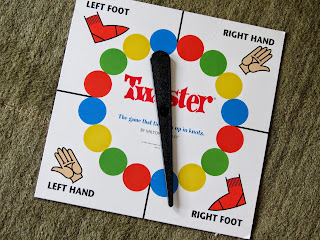
Aleigha was the third student that I was assigned to. Her post was about Dot Day. For Dot Day, her class spent time with a Pre-K class. She spent the day with a girl named Sophia and they did all kinds of fun activities with dots. They drew their names using Bingo stampers, did activities with the candy Dots, and played Twister. She said that they had a blast. In my comment, I told her how much fun their day sounded and how creative the activities were. I told her that I had never heard of Dot Day until recently but that it sounds like loads of fun.
Week 4:
The last student that I was assigned to was Khaia. Her post included a Google Slides presentation about a book that she read. The book is called The Three Ketes of Knowledge. In her presentation, she described what each of the three ketes stood for and explained what a kete actually is. In my comment, I started off by telling her how cute her blog is. Then, I told her that I enjoyed her presentation and that it seems like an interesting book. I told her that I did not know what a kete was prior to viewing her presentation. She did an excellent job with Google Slides.
Week 1:
Elliot was the first student that I was assigned to this month. I was actually assigned to Elliot once before, and I absolutely love reading his posts. I actually read all of his other posts in addition to the one that I commented on. In the post that I commented on, he talked about his new math class. He said that although fifth grade math is a lot more difficult than fourth grade math, he is having a lot of fun in class this year. He then expressed that he never actually hated math and that he has secretly loved it all this time. In my comment, I told him that I also love math. I said that that fifth grade math is some pretty tough stuff and that I am glad he is enjoying his new class.
Week 2:
The second student that I was assigned to was Brodie. He expressed a lot of opinions in the post that I read. He said that he thinks students should be able to use their phones as research tools in the classroom. He also said that students should be allowed to wear whatever they want to school instead of spending money on uniforms. He also said something quite powerful for someone his age. He basically said that more people should express their opinions and stand up for what they believe in. In my comment, I told him that I completely agree with both statements. I said that cell phone use in the classroom would be beneficial to students as long as teachers monitor students while they are using their phones. I also said that although uniforms are convenient, they limit students' ability to express themselves. I also expressed that he was very right in saying that more people should share their opinions and make a stand.

Aleigha was the third student that I was assigned to. Her post was about Dot Day. For Dot Day, her class spent time with a Pre-K class. She spent the day with a girl named Sophia and they did all kinds of fun activities with dots. They drew their names using Bingo stampers, did activities with the candy Dots, and played Twister. She said that they had a blast. In my comment, I told her how much fun their day sounded and how creative the activities were. I told her that I had never heard of Dot Day until recently but that it sounds like loads of fun.
Week 4:
The last student that I was assigned to was Khaia. Her post included a Google Slides presentation about a book that she read. The book is called The Three Ketes of Knowledge. In her presentation, she described what each of the three ketes stood for and explained what a kete actually is. In my comment, I started off by telling her how cute her blog is. Then, I told her that I enjoyed her presentation and that it seems like an interesting book. I told her that I did not know what a kete was prior to viewing her presentation. She did an excellent job with Google Slides.
Tuesday, October 14, 2014
Blog #9
Project Based Learning (PBL) is a very popular teaching/learning method and is becoming more and more common in schools. We can learn a lot from those who implement or participate in PBL regularly.
Seven Essentials to Project Based Learning is a very beneficial article for those who are unsure of how to implement PBL in their classroom. Listed are seven distinct things that are crucial to every project. The seven essentials listed in the article are as follows: a need to know (an introduction to the material), a driving question (used to focus the students' efforts), student voice and choice, 21st century skills (collaborating and communicating), inquiry and innovation (generating more detailed questions in addition to driving question), feedback and revision (critiquing one another's work), and a publicly presented product (reflection on completed project and what they gained in terms of knowledge, skills, and pride). These seven things are definitely necessary in executing PBL in the classroom. This is a very good starting point for those who do not know how to integrate this method into their teaching style.
The video Project Based Learning for Teachers is very helpful for those who are unsure of why they should bring PBL into their classroom. It expresses a very easy way to know why PBL is useful: the four C's. It shows that PBL teaches collaboration skills, communication skills, critical thinking skills, and career/life skills. These are all skills that we want our students to leave our classroom with and keep with them forever.. They are also skills that are essential to have upon graduating and entering the real world.
 PBL: What Motivates Students Today is a video compilation of different students expressing what their main motivators are to do well in school. The students' answers range from receiving positive feedback from teachers to wanting to have good grades to get into college. Some students also talk about positive and negative consequences as motivators. Some students want to do well so they will be rewarded with things such as money and candy, and some students want to do well to avoid negative consequences such as being grounded at home. Everyone is not motivated by the same thing, so it is important for teachers to learn what motivates each individual student and use that in the classroom. This video is a great reminder of that.
Ten Sites Supporting Digital Classroom Collaboration in Project Based Learning is an article that I will definitely be saving for future reference. This article presents the readers with ten websites that assist in classroom collaboration through the use of technology. Some of the websites, such as Titan Pad, seem to have a purpose similar to that of Google Docs or Padlet. Most of the websites do not even require you to make an account. You can just provide the students with the URL and they can begin collaboration. I really like the idea behind Linoit. It is basically a digital cork board that students can access from anywhere. The "cork board" can contain images, sticky notes, videos, and more. The article also provides you with links that include ways you can use some of these websites in your classroom. This article is definitely a helpful resource worth keeping.
In the video High School Teachers Meet the Challenges of PBL Implementation, several teachers discuss the difficulties they have faced while trying to implement PBL in their classroom. One of the biggest issues seems to be that teachers who have been teaching one way for years are now having to change their way of teaching. I will not have to face that issue since I will start my teaching career using PBL, but it is nice to hear someone say how difficult it is to transition but how rewarding it actually is. Another problem mentioned is that some teachers do not know how to implement PBL in a certain subject area (mostly math and English). Some teachers expressed that although it may take some time to figure out how it fits into their particular subject area, they enjoy having a voice and being able to execute their own ideas in their classrooms. The teachers' words and the statistics at the end of the video really helped me realize how big of an impact PBL really makes in the classroom. I really enjoyed this video and it has made me even more excited to use PBL in my future classroom.
Seven Essentials to Project Based Learning is a very beneficial article for those who are unsure of how to implement PBL in their classroom. Listed are seven distinct things that are crucial to every project. The seven essentials listed in the article are as follows: a need to know (an introduction to the material), a driving question (used to focus the students' efforts), student voice and choice, 21st century skills (collaborating and communicating), inquiry and innovation (generating more detailed questions in addition to driving question), feedback and revision (critiquing one another's work), and a publicly presented product (reflection on completed project and what they gained in terms of knowledge, skills, and pride). These seven things are definitely necessary in executing PBL in the classroom. This is a very good starting point for those who do not know how to integrate this method into their teaching style.
The video Project Based Learning for Teachers is very helpful for those who are unsure of why they should bring PBL into their classroom. It expresses a very easy way to know why PBL is useful: the four C's. It shows that PBL teaches collaboration skills, communication skills, critical thinking skills, and career/life skills. These are all skills that we want our students to leave our classroom with and keep with them forever.. They are also skills that are essential to have upon graduating and entering the real world.

Ten Sites Supporting Digital Classroom Collaboration in Project Based Learning is an article that I will definitely be saving for future reference. This article presents the readers with ten websites that assist in classroom collaboration through the use of technology. Some of the websites, such as Titan Pad, seem to have a purpose similar to that of Google Docs or Padlet. Most of the websites do not even require you to make an account. You can just provide the students with the URL and they can begin collaboration. I really like the idea behind Linoit. It is basically a digital cork board that students can access from anywhere. The "cork board" can contain images, sticky notes, videos, and more. The article also provides you with links that include ways you can use some of these websites in your classroom. This article is definitely a helpful resource worth keeping.
In the video High School Teachers Meet the Challenges of PBL Implementation, several teachers discuss the difficulties they have faced while trying to implement PBL in their classroom. One of the biggest issues seems to be that teachers who have been teaching one way for years are now having to change their way of teaching. I will not have to face that issue since I will start my teaching career using PBL, but it is nice to hear someone say how difficult it is to transition but how rewarding it actually is. Another problem mentioned is that some teachers do not know how to implement PBL in a certain subject area (mostly math and English). Some teachers expressed that although it may take some time to figure out how it fits into their particular subject area, they enjoy having a voice and being able to execute their own ideas in their classrooms. The teachers' words and the statistics at the end of the video really helped me realize how big of an impact PBL really makes in the classroom. I really enjoyed this video and it has made me even more excited to use PBL in my future classroom.
Thursday, October 9, 2014
Implications and Teaching Opportunities for Camera Use in Teaching and Learning
Nowadays, it is difficult to come across someone who does not own some type of smartphone. Most people do not go anywhere without theirs and use it for literally everything that they do. Smartphones can help you accomplish just about anything from communicating to researching. They are also extremely convenient. I have had one for about five years now and probably could not function without it. They are increasingly becoming more and more common and have really become an essential tool for many different people over the years.
Most schools do not allow cellphone use in the classroom because they are distractive and can be used for cheating. Instead of banning smartphones from the classroom, schools should accept the fact that technology is becoming essential to everyday life and implement it even more. All smartphones have access to the internet, and the internet has so much information that can be very beneficial to student learning. Smartphones should be allowed in the classroom as research tools. This would be successful as long as teachers make sure to monitor the students to ensure they are using their phones in the correct manner. This could especially be helpful for schools that cannot afford to give their students access to iPads and other technology. Some other ideas on how smartphones can be used in the classroom can be found here.

By the time I begin teaching, depending on what age group I will be working with, I am sure that most of my students will have access to a smartphone. Most smartphones have cameras, and there are so many different ways that such a tool can be used in the classroom. Some examples include taking photos to demonstrate the five senses, taking photos of different objects to learn the colors, taking photos of their pet at home to include in a presentation about animals, and taking photos to put on their blog (which I definitely intend to implement in my future classroom). There are so many different things that you can do with a smartphone camera, or even just a smartphone itself, in the classroom. Schools who have not yet done so need to realize how beneficial these tools can be to student learners.
Monday, October 6, 2014
Blog #8

C4T #2
For my second C4T assignment, I was required to read two posts by Dorothy Burt. The two posts that I read were very different but were both very interesting.
 Sparking Learning
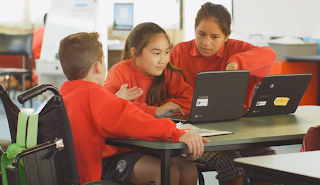
This post focuses on a video called Digital Learning. In the video, a foundation known as Spark provided underprivileged students with modern technology so that they can further their learning. The school being featured in the video is actually one of the schools that I've had to do a C4K assignment for. In my comment, I expressed how incredible the foundation is and how remarkable it is that underprivileged students now have the opportunity to work with such technology. These students will have so many new doors open up for them now that they have the same privileges as everyone else.
Longevity of The Essay
This post also focuses on a video, In 15 years: Death of the essay?. This video was so interesting, especially since I am enrolled in a class that completely revolves around technology. This video involves a professor expressing that the written word will become completely obsolete within the next fifteen years. He says that we are communicating thoughts with media more now than at any other time in history. He expresses that change is coming. In my comment, I expressed that I completely agree with the professor in the video. I said that while I do not believe that the written word and essays will ever become completely obsolete, I definitely think that technology is taking over. I said that we need to accept the fact that change is coming and embrace it as it comes.
Subscribe to:
Posts (Atom)